Your Reliable High Quality Wholesale Custom Clothing Manufacturers

How to Start Manufacturing of Clothes Business: A Proven Guide (2025)
The garment industry generates major revenue streams that appeal to everyone from Gen Z to baby boomers. The manufacturing of clothes plays a pivotal role in this sector, which keeps growing faster and remains vital to the global economy. Customer demand stays strong for all clothing categories.
Starting a successful clothing production business brings its share of challenges. The biggest problems include keeping up with fast-changing fashion trends, managing inventory well, and dealing with . These hurdles exist, but the clothing manufacturing process creates great opportunities for entrepreneurs. A well-managed apparel manufacturing business can turn highly profitable. The benefits include strong market demand, flexible pricing options, and worldwide reach through e-commerce platforms.return rates as high as 30-50%
Brands need flexible and tech-driven strategies to stay competitive in 2025. Note that sustainability has become a key differentiator in the market. Today’s customers prefer eco-friendly practices and materials. On top of that, advanced ERP solutions help businesses streamline their operations from inventory management to customer relationships.
This piece will guide you through everything you need to know about launching and running a successful clothing manufacturing business in 2025.
Understand the Manufacturing of Clothes Process
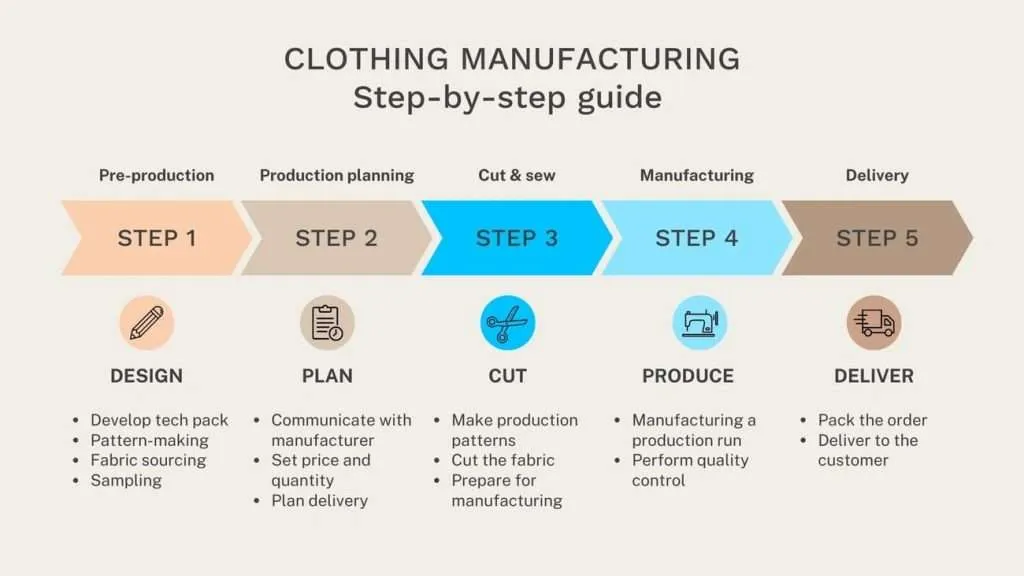
Your manufacturing of clothes business’s success depends on how well you understand the technical side of making garments. You need to know how designs become wearable products. Let’s get into the vital stages that are the foundations of garment manufacturing.
Design and tech pack creation
A tech pack starts the professional clothing manufacturing process. This works as a blueprint for each garment and helps designers communicate clearly with manufacturers. The document has:tech pack
- Technical sketches showing multiple views (front, back, side)
- Material specifications and bill of materials (BOM)
- Detailed measurement specifications with size grading
- Construction details and special instructions
Tech packs help avoid confusion between designers and manufacturers and cut sampling costs by a lot. Data shows that clients with good tech packs are in two or fewer sampling rounds. This saves about $300-$750 per design in sampling costs alone.82% more likely to achieve production
Most manufacturers won’t take production orders without detailed tech packs. These documents work as contractual specifications and help track product development, changes, and revisions.
Pattern making and grading
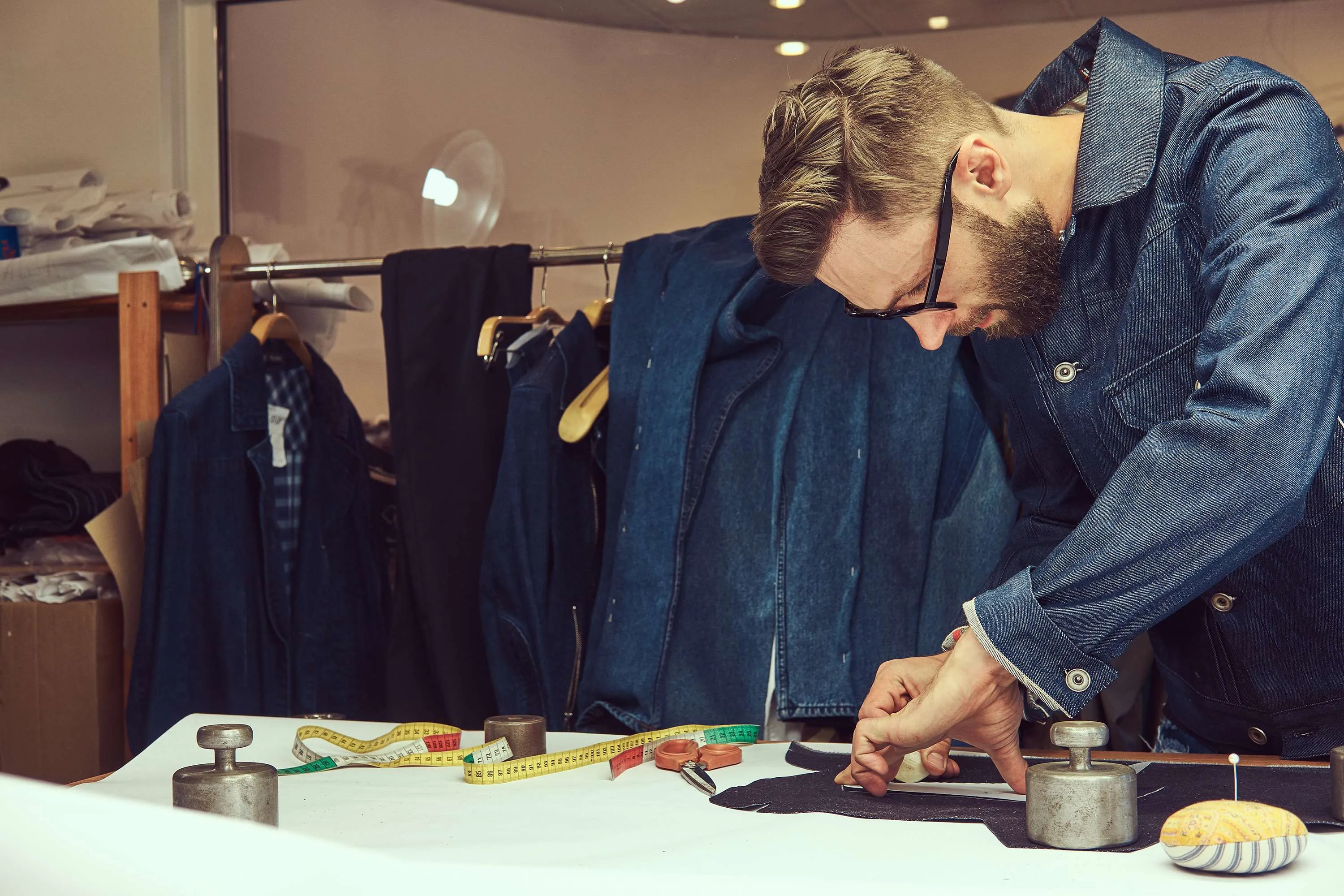
The next step turns these specifications into real patterns. Pattern making builds the foundation for garment construction through precise drafting of each component’s template.
Pattern makers use paper cardboard to create garment outlines, though is now common. This step will give you the right sizing, fitting, and measurements in your final product.Computer-Aided Design (CAD)
After creating patterns, grading helps produce multiple sizes. The base pattern adjusts to create different sizes while keeping the original design’s style and proportions. Pattern grading uses three main methods:
- Cut and spread method – cutting along fold lines and increasing/decreasing space uniformly
- Pattern shifting – moving pattern pieces at constant distances from fixed points
- Computer grading – using software for faster, more efficient adjustments
Good grading helps maintain consistent fit in all sizes, which builds your brand’s credibility and keeps customers happy.
Fabric cutting and preparation
The cutting department sits at the heart of garment manufacturing. Raw materials start to become components here through several steps:
Fabric spreading happens first. Multiple layers stack on cutting tables. Block cutting might be needed for patterned fabrics to line up checks or stripes perfectly.
The cutting follows pattern specifications using straight knives, band knives, or computerized cutting machines based on what’s available. Modern factories might use laser cutters or automated systems. These can cut hundreds of fabric layers at once and save production time.
Quality control checks cut pieces for accuracy and defects next. Cut components get number sealing or stickers to track them. This ensures each garment keeps consistent shade and shrinkage properties.
The final step bundles cut components for easy transfer to sewing. Good organization here helps the rest of production run smoothly.
These basic processes help build a successful clothing manufacturing business. They create smooth production flow and consistent quality throughout your operation.
Set Up Your Manufacturing of Clothes Production Workflow
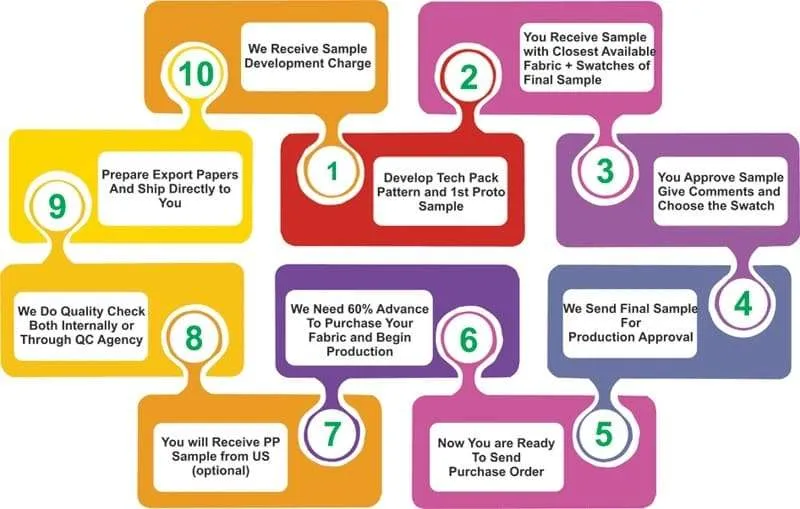
A solid production workflow is the foundation of every successful garment manufacturing business. Once you’ve finalized your designs and patterns, you’ll need to set up operations that strike the right balance between quality, cost, and speed. Let me show you how to create a manufacturing system that fits your production needs and market position.
Choose between mass production and custom manufacturing
Your production approach will shape your business model, target market, and operational structure. Both systems come with their own advantages:
Mass Production Benefits:
- Better efficiency through automated processes and machinery
- Lower per-unit costs through economies of scale
- Similar quality across large batches of items
- Better scaling for high-volume orders
Custom Clothes Manufacturing Advantages:
- Freedom to create unique, tailored products
- Better quality through attention to individual garments
- Knowing how to serve niche markets with specialized products
- Lower minimum order quantities for production runs
Your market and product complexity will guide your choice. Mass production works best for simple products with wide appeal, while custom manufacturing shines with detailed designs for specific niches. Many successful manufacturers start by mixing both approaches – custom production for premium lines and mass production for basic items.
Organize sewing, assembly, and finishing stations
Your production floor’s layout can make or break workflow efficiency. Here are the main production systems to think about:
Progressive Bundle System (PBS) – Operators handle bundles of cut parts and complete specific tasks before passing components forward. This traditional system suits large batch production.
Unit Production System (UPS) – Operators handle multiple tasks as garments move one by one through production. This method adapts well to custom orders.
Modular Production – Teams with multiple skills cooperate to finish entire garments. This approach helps control quality and adapt to style changes.
Whatever system you pick, arrange your production floor in sequence: cutting area first, then sewing stations, assembly, finishing, and packaging. This straight-line setup reduces material movement and streamlines production.
Implement quality control at each stage
Quality control works best as an ongoing process, not just a final check. A reliable QC system cuts costs by catching problems early and protects your reputation.
Set up checkpoints at these key stages:
- Pre-production – Check raw materials before cutting starts – fabric quality, color matching, and accessory specs
- In-process – Watch critical operations during production and check seam strength, stitching accuracy, and measurements
- Final inspection – Look at finished garments for appearance, function, and spec compliance
Clear quality standards with specific criteria help keep assessments consistent. Many manufacturers use the to set defect rate limits during random sampling.Acceptable Quality Limit (AQL) system
Keep detailed records of inspections, defects, and fixes to spot trends and improve your processes. This informed approach helps identify common issues and optimize your manufacturing workflow.
Build a Skilled Team and Use the Right Tools
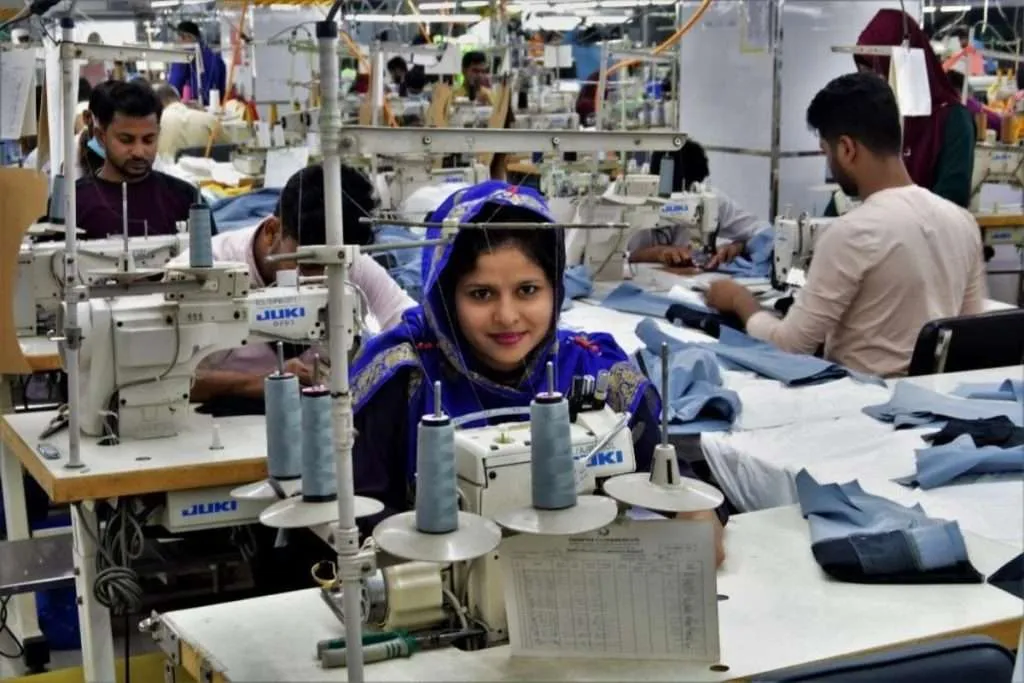
“Demand quality, not just in the products you buy, but in the life of the person who made it.” — Orsola de Castro, Upcyclist, fashion designer, author, and co-founder of Fashion Revolution
People are the life-blood of a successful clothes manufacturing operation, even as automation grows. A great team combined with the right technology creates the foundations for excellence in garment manufacturing.
Hire pattern makers, cutters, and machine operators
Finding skilled professionals with specific expertise builds a strong workforce. A talented plays a vital role by turning design concepts into functional templates. A skilled pattern maker “can definitely make all the difference for the end result”, particularly for sportswear that needs perfect fit and movement understanding.pattern maker
Your core team should include:
- Production Manager/Garment Technologist – Runs manufacturing processes with simple pattern-making skills
- Pattern Cutters – Create patterns from client measurements and work with designers
- Machine Operators – Handle sewing equipment, check quality, and manage packaging
- Quality Control Specialists – Check finished garments for defects and spec compliance
Look for candidates who understand garment construction, pattern optimization, and production timelines. Staff with hands-on experience in offshore manufacturing clothes add extra value to your operation.
Train staff on machinery and safety
Training forms the backbone of your manufacturing business. Regular sessions help employees “”. A well-laid-out training program encourages “a culture of continuous improvement, giving your team the ability to suggest process improvements and creative solutions”.up-to-date with the latest technologies and industry trends
Machine operation training reduces downtime and material waste significantly. Safety training becomes crucial in apparel manufacturing where staff work with cutting tools, sewing machines, and pressing equipment daily.
Staff with proper training “are more likely to identify issues, leading to improved quality control and better production efficiency”. This ended up boosting productivity and product quality.
Use garment manufacturing software for coordination
Digital tools have become essential for efficient garment production in 2025. Specialized software helps companies “keep up with trends and increase their manufacturing capabilities while catering to customer requests quickly and efficiently”.
Katana offers immediate master planning that “automates sales order generation and manufacturing order prioritization, making on-time order fulfillment simple”. MRPeasy delivers powerful production planning with “dynamic production calendars, backward scheduling,” and “one-click lead time and production cost estimating”.
FastReactPlan enables “effective master planning across multiple factories” with its “highly visual, flexible ‘drag and drop’ approach”. The right software helps track everything from stock levels to “so that each task moves along smoothly without any major setbacks or disruptions”.manufacturing operations
These technology investments let you “focus on designing production lines capable of operating at total capacity without requiring the attention of highly-skilled labor”. This makes your operation more flexible and efficient.
Manage Inventory, Orders, and Distribution
A well-run inventory and order management system works like a vital circulatory system in successful clothing manufacturing. Your business stays profitable and competitive when you track materials, process orders, and plan distribution properly.
Track raw materials and finished goods
A perpetual inventory system lets you track immediately, which shows your current asset value accurately. This system helps you keep optimal stock levels and cuts down risks of having too much inventory or running short on critical materials.raw material quantities and costs
Your fabric management works best with these two accounting methods:
- First-in, first-out (FIFO): This method assumes you use your first-purchased materials first in production, which shows current costs accurately on balance sheets
- Moving average cost: You get a fluid valuation that updates non-stop by calculating average cost across all units
Smart raw materials management frees up money that would sit idle in extra inventory, which boosts your cash flow. Your production stays on schedule when you know your supplier lead times and build them into your inventory plans.
Use ERP systems for order management
The clothes manufacturing industry benefits from specialized ERP software that offers complete solutions from sourcing to distribution. These systems combine operations into one central platform that creates efficient workflows and timely delivery.
Your apparel-specific ERP should have these key features:
- Material procurement tracking by color and product codes
- Forecast-based reordering
- Multi-channel sales and distribution capabilities
- End-to-end supply chain visibility
Software solutions like FDM4, Apparel Connect, and Aptean give you specialized tools for detailed product development, complete order management, and advanced inventory control.
Plan packaging and shipping logistics
Quality packaging and shipping affect your brand’s reputation and customer loyalty directly. You should use good packaging materials that protect garments during transit without extra cushioning that makes packages bigger and pricier.
Smart shipping starts with grouping items headed to the same destination. Your shipping process needs software that gives immediate updates to prevent delays and fix problems quickly. The environment benefits when you pick eco-friendly packaging materials that reduce your carbon footprint.
Focus on Sustainability and Innovation
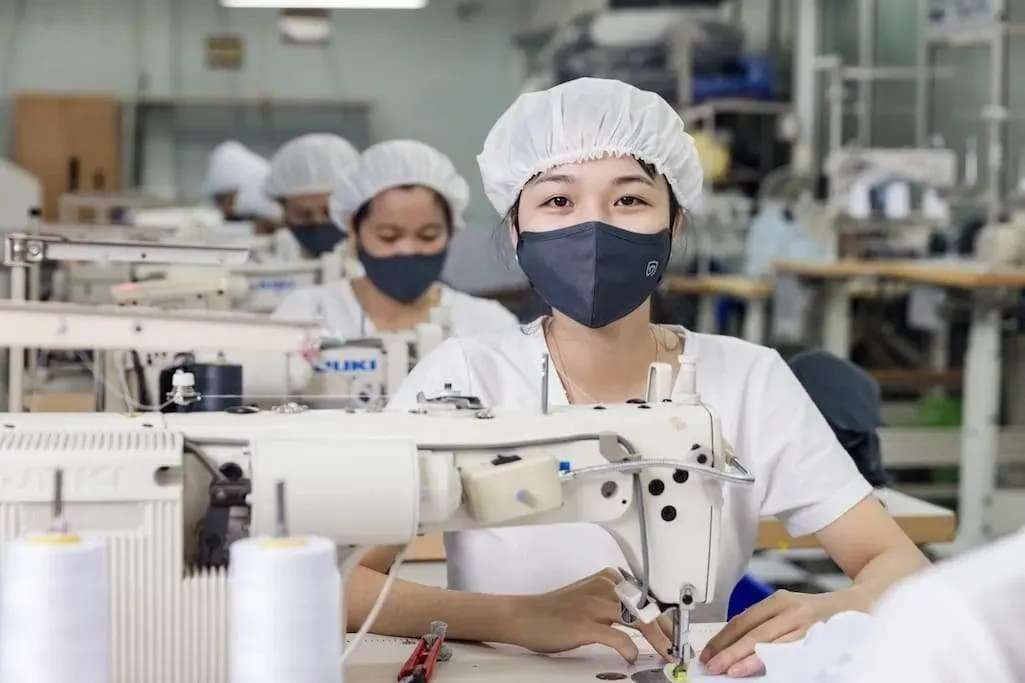
“Fast fashion is like fast food. After the sugar rush, it just leaves a bad taste in your mouth.” — Livia Firth, Co-founder and creative director of Eco-Age
Sustainability gives garment manufacturers a clear edge over their competition. The fashion industry’s environmental and social impact keeps growing. Companies must adopt eco-friendly practices to succeed in the long run.Use eco-friendly fabrics and processes are the foundations of responsible manufacturing of clothes today. Organic cotton grows without synthetic pesticides. It helps soil health and uses less water. Bamboo fabric stands out with its unique features. It needs minimal water, naturally fights bacteria, and breaks down completely.Sustainable materials
These innovative materials create truly circular production:
- Recycled polyester from plastic bottles keeps waste out of landfills
- Tencel from sustainably harvested eucalyptus trees runs on closed-loop systems
- Econyl regenerated nylon comes from old fishing nets and fabric scraps
Eco-friendly dyeing methods can cut your environmental impact by a lot. Modern waterless dyeing with supercritical CO2 removes the water requirement and uses fewer chemicals. The textile value chain just needs USD 20-30 billion more each year to become sustainable.
Reduce waste through lean manufacturing
Lean production methods streamline processes and cut waste in clothes manufacturing. Value stream mapping (VSM) spots inefficiencies clearly. One shirt maker showed this when they cut work-in-process inventory by 74.3% and lead time by 71.1%.
Motion, inventory, and overproduction are the biggest problems in garment production. Materials and machines cause most issues. Manufacturers can boost productivity and make customers happier by using lean tools systematically. This requires minimal investment.
Adopt automation and AI for efficiency
Modern robotics systems tackle tough fabric tasks thanks to better vision systems and soft robotics. These systems handle repetitive work while workers focus on oversight, improving processes, and maintenance.
AI algorithms make sustainability better by optimizing fabric use and reducing waste during production. Machine learning helps manufacturers predict demand accurately. It spots equipment problems early and makes operations smoother. This leads to lower costs through better resource use.
Conclusion
Starting a clothes manufacturing business in 2025 needs a complete grasp of traditional craftsmanship and state-of-the-art technology. This piece explores the key components needed to build a thriving operation in the garment industry. Quality production depends on technical processes like pattern making and fabric cutting along with efficient workflows. Each element plays a significant role in your business success.
Your team’s expertise might be the biggest factor in manufacturing excellence. Quality production relies on skilled pattern makers, cutters, and machine operators. Modern ERP systems and specialized software enable continuous connection across operations. These tools optimize efficiency and reduce costly errors substantially.
The clothing manufacturing world has moved toward eco-friendly practices. Green fabrics, waste reduction strategies, and energy-efficient processes are no longer optional – they’re essential business practices. Buyers just need transparency and responsibility. This makes sustainable manufacturing both an ethical choice and a smart business move.
Material costs fluctuate, fashion trends evolve, and supply chains grow complex. Yet innovative manufacturers still find substantial opportunities. E-commerce provides global reach, and locally-produced garments see growing demand. These factors create perfect conditions for new players with fresh ideas.
A soaring win in clothing manufacturing comes from balancing quality, efficiency, and adaptability. Note that continuous improvement of processes while staying dedicated to excellence makes the difference. A well-laid-out creates beautiful garments and builds lasting bonds with designers, retailers, and consumers alike.clothing manufacturing business