Your Reliable High Quality Wholesale Custom Clothing Manufacturers

How to Choose the Right Bulk Clothing Manufacturer for Your Mid-Sized Retail Business
Introduction: Why Choosing the Right bulk clothing manufacturer Matters
Reliable clothing manufacturer is far more than a procurement decision—it’s a strategic investment that directly impacts your profitability, brand reputation, and growth potential. Unlike large retailers with established global supply chains or small boutiques that work with niche artisan producers, mid-sized retailers face a distinctive challenge: you need a manufacturing partner that combines production capacity with flexibility, quality consistency with cost efficiency, and professional communication with personalized attention.
The stakes are high. According to recent industry research, approximately 60% of mid-sized apparel retailers report significant dissatisfaction with their current manufacturing partners, citing persistent issues such as inconsistent quality across production runs, missed delivery deadlines, and inadequate communication throughout the manufacturing process. These challenges don’t just create operational headaches—they directly impact your bottom line through increased returns, damaged customer relationships, and lost market opportunities.
Comprehensive manufacturing guide that mid-sized retailers face when sourcing from bulk clothing manufacturers and provides actionable, evidence-based solutions to help you identify and partner with a manufacturing provider that truly understands your business model and growth ambitions.

Understanding the Unique Challenges Mid-Sized Retailers Face
Challenge 1: Quality Inconsistency Across Production Runs
When you transition from small, limited-run batches to larger commercial orders, quality control becomes exponentially more complex. Many bulk clothing manufacturers prioritize production speed and volume over consistency, resulting in frustrating variations in fabric weight, stitching precision, color accuracy, and overall garment construction between different production runs.
The Real-World Impact: A typical mid-sized retailer places orders ranging from 500 to 5,000 units per style. Even a seemingly modest 2-3% defect rate translates to 10-150 damaged or substandard units per order—a volume significant enough to trigger customer complaints, damage your brand reputation, and erode the customer satisfaction scores that drive repeat business and referrals.
Consider this scenario: You launch a new hoodie design in five colors with an average order of 2,000 units per color. A 2.5% defect rate means 250 defective hoodies across your entire order. After accounting for returns, customer service costs, and potential negative reviews, that quality issue could cost you thousands in direct and indirect expenses.
Challenge 2: Lead Time Unpredictability and Supply Chain Delays
Mid-sized retailers operate in a fast-moving, competitive market where seasonal trends and customer demand can shift rapidly—sometimes within weeks. A bulk clothing manufacturer that cannot meet flexible timelines or fails to communicate production delays in advance creates a cascading domino effect: missed seasonal sales opportunities, excess inventory tying up cash, stockouts during peak demand periods, and ultimately, lost revenue.
The challenge intensifies when you’re working with multiple product lines or seasonal collections. If one manufacturer misses a deadline by even two weeks, your entire product launch strategy can unravel, forcing you to either rush inventory to market unprepared or delay your launch and lose the seasonal window entirely.
Challenge 3: Minimum Order Quantities (MOQs) That Don’t Align with Your Business Model
Many bulk clothing manufacturers impose rigid, one-size-fits-all minimum order quantities (MOQs) that create a painful dilemma for mid-sized retailers. MOQs that are too high force you to overstock inventory, tying up precious capital and creating the risk of unsold merchandise. Conversely, MOQs that are too low make per-unit production costs prohibitively expensive, squeezing your profit margins and making it impossible to price competitively.
Finding a bulk clothing manufacturer willing to offer flexible MOQs is essential for maintaining healthy margins while maintaining the agility to test new designs, respond to market trends, and optimize your inventory investment.
Challenge 4: Communication Barriers and Lack of Production Transparency
Language barriers, time zone differences, and outdated project management systems create significant friction in the manufacturing process. Without real-time visibility into production status, quality inspections, and shipping timelines, you’re left in a state of uncertainty—constantly wondering about order progress, unable to identify problems until they become crises, and unable to make informed decisions about your inventory and sales forecasts.
Key Metrics: What to Look for in a Reliable bulk clothing manufacturer
Before evaluating specific manufacturers, establish clear performance benchmarks. The following table compares industry standards with the ideal performance metrics for mid-sized retailers:
| Metric | Industry Standard | Ideal for Mid-Sized Retailers | Why It Matters |
| Lead Time (FOB) | 60-90 days | 45-60 days | Faster lead times improve cash flow and reduce inventory carrying costs |
| Quality Acceptance Rate | 95-97% | 98%+ | Higher acceptance rates reduce returns and customer dissatisfaction |
| MOQ per Style | 1,000-5,000 units | 300-2,000 units | Lower MOQs provide flexibility to test designs and manage inventory |
| Sampling Time | 10-14 days | 5-7 days | Faster sampling accelerates product development cycles |
| Communication Response Time | 24-48 hours | 4-8 hours | Rapid communication enables quick problem-solving |
| Customization Flexibility | Limited | High (design, materials, packaging) | Customization options strengthen your brand differentiation |
These metrics serve as your baseline for evaluating potential manufacturing partners. Any manufacturer unable to meet or exceed these standards should be a red flag.
How to Evaluate and Select a bulk clothing manufacturer: A Step-by-Step Framework
Step 1: Verify Production Capacity, Specialization, and Track Record
Not all bulk clothing manufacturers are created equal. t-shirts, hoodies, sweatpants, while others excel in complex garments (structured jackets, technical wear, performance fabrics). manufacturer verification best practices
- Dedicated production lines specifically configured for your product category, not general-purpose lines that switch between different garment types
- Sufficient capacity to handle your peak order volumes without compromising quality or extending lead times
- Relevant experience serving other mid-sized retailers (not just enterprise clients or small boutique brands)
- Proven track record with your specific product category, demonstrated through case studies, client references, or portfolio examples
Ask potential manufacturers directly: “What percentage of your production capacity is dedicated to [your product category]?” and “Can you provide references from three mid-sized retailers currently using your services?” Their willingness and ability to answer these questions transparently reveals a lot about their professionalism and confidence in their capabilities.
Step 2: Request Detailed Samples, Quality Documentation, and Certifications
Before committing to a large production order, request multiple samples across different production batches. This isn’t a formality—it’s your opportunity to assess quality consistency, construction details, and material performance. Specifically request:
- Multiple samples from different production batches to verify consistency
- Detailed specification sheets documenting fabric composition, weight, shrinkage rates, and care instructions
- Quality control reports from previous production runs, including defect rates and remediation actions
- Industry certifications
- References from other mid-sized retailers they currently serve, ideally in your product category
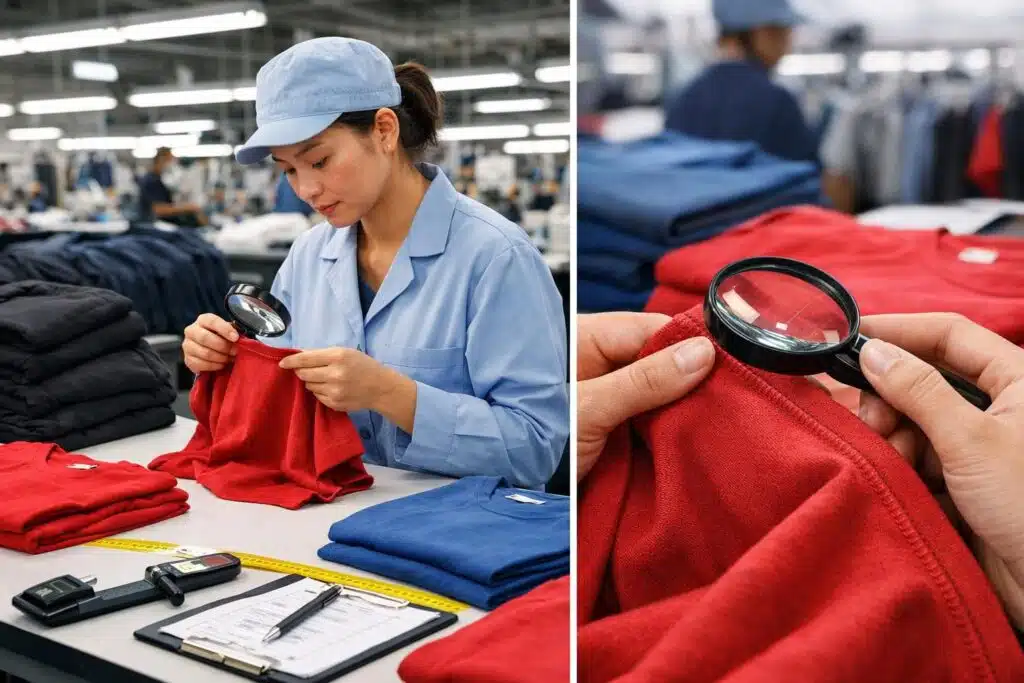
Pay close attention to the quality of the samples themselves. Are the stitches even? Is the fabric consistent? Are the labels properly attached? These details reveal the manufacturer’s attention to quality and their commitment to excellence.
Step 3: Establish Clear Communication Protocols and Accountability Structures
A reliable bulk clothing manufacturer should provide transparent, responsive communication throughout the entire manufacturing process. Establish clear expectations upfront by confirming they offer:
- Dedicated account manager or primary point of contact who understands your business and serves as your advocate within their organization
- Weekly production updates via email or project management platform, including progress photos and quality inspection results
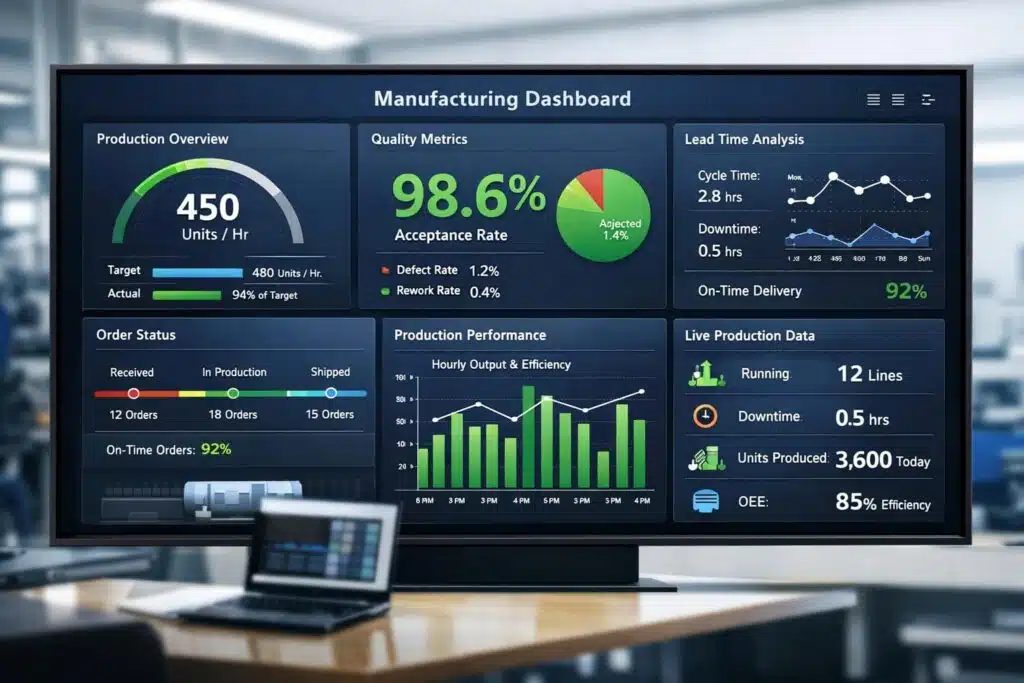
- Real-time production dashboards or photo documentation showing order status, production milestones, and quality checks
- Escalation procedures for urgent issues, with defined response times for different severity levels
- Proactive communication about potential delays, quality concerns, or supply chain disruptions
Step 4: Negotiate Flexible Terms That Align with Your Business Model
Mid-sized retailers benefit significantly from manufacturers willing to negotiate on key commercial terms. Use your evaluation process to negotiate:
- Flexible MOQs: Request the ability to start with lower quantities for new styles (perhaps 300-500 units) while committing to higher volumes for proven bestsellers
- Favorable payment terms: Negotiate a structure such as 30-50% deposit upon order confirmation, 50-70% before shipment, and the balance upon delivery
- Baseline lead times with rush options: Establish standard lead times (e.g., 50 days) while confirming that rush orders are available at a premium (typically 15-25% surcharge)
- Customization flexibility: custom packaging, branded labels, hang tags
- Volume-based pricing: Negotiate tiered pricing that rewards loyalty and larger order volumes
Remember: The lowest price is rarely the best value. A manufacturer offering a 15% cost reduction that results in a 5% defect rate, missed deadlines, and constant quality issues will ultimately cost you far more in customer returns, brand damage, and operational overhead.
Common Pitfalls to Avoid When Selecting a bulk clothing manufacturer
Pitfall 1: Choosing Based Solely on Price
This is the most common and costly mistake mid-sized retailers make. The cheapest bulk clothing manufacturer is rarely the best value proposition. A 15% cost savings that results in quality issues, missed deadlines, and constant operational friction will cost you exponentially more through customer returns, brand damage, and the hidden costs of managing a problematic supplier relationship.
Instead, evaluate manufacturers on a total cost of ownership basis that factors in quality, reliability, communication, and the operational costs of managing the relationship.
Pitfall 2: Ignoring Sustainability, Compliance, and Ethical Manufacturing Standards
Modern consumers—particularly in Western markets—increasingly care about ethical manufacturing, environmental impact, and supply chain transparency. Partnering with a bulk clothing manufacturer that ignores labor standards, environmental regulations, or industry certifications exposes your business to significant legal liability, reputational damage, and customer backlash.
Verify that your bulk clothing manufacturer complies with relevant labor standards, environmental regulations, and industry certifications appropriate to your market. This isn’t just ethically important—it’s a business imperative.
Pitfall 3: Relying Entirely on a Single Manufacturing Partner
Concentrating all your manufacturing with one partner creates dangerous supply chain risk. Equipment failures, labor disputes, natural disasters, or shifts in the manufacturer’s priorities can suddenly disrupt your entire production pipeline.
Maintain active relationships with 2-3 qualified manufacturers, even if your primary partner handles 70-80% of your volume. This approach provides negotiating leverage, backup capacity during peak seasons, and insurance against supply chain disruptions.
Pitfall 4: Overlooking Communication and Relationship Quality
A manufacturer with excellent pricing and capacity but poor communication will create constant frustration and operational headaches. Prioritize manufacturers who demonstrate responsiveness, transparency, and genuine interest in understanding your business and supporting your growth.
Frequently Asked Questions About bulk clothing manufacturers
Q: What is a reasonable lead time when working with a bulk clothing manufacturer?
A: For mid-sized orders (500-5,000 units), expect 45-90 days from order confirmation to FOB (Free on Board). This timeline includes sampling approval, production setup, garment manufacturing, quality inspection, and packaging. Rush orders are typically available but incur 15-25% premiums. Always confirm specific lead times in writing before placing orders.
Q: How can I ensure consistent quality across multiple production runs?
A: Establish a detailed quality control agreement specifying acceptable defect rates (typically 2-3%), testing procedures, inspection protocols, and remediation processes. quality control protocols, and conduct final quality inspections before shipment. Consider hiring a third-party quality inspection service for large orders.
Q: What specific questions should I ask a bulk clothing manufacturer about their supply chain?
A: Ask about fabric sourcing (do they source directly or through intermediaries?), dyeing and finishing facilities (do they own these or subcontract?), whether they own production equipment or lease it, their backup suppliers for critical materials, and their contingency plans for supply disruptions. Manufacturers who control more of the supply chain typically offer better consistency and faster problem resolution.
Q: How can I reduce per-unit costs without sacrificing quality?
A: Increase order quantities (economies of scale typically kick in at 2,000+ units), simplify designs (fewer colors, less complex construction), choose standard fabrics over specialty materials, and commit to longer-term partnerships. Many bulk clothing manufacturers offer volume discounts and loyalty pricing for reliable, repeat customers. Negotiate annual volume commitments in exchange for preferential pricing.
Q: What certifications should a bulk clothing manufacturer have?
A: Relevant certifications vary by product category and target market. OEKO-TEX, GOTS, Fair Trade Certified, SA8000 (labor standards), or ISO 9001 (quality management). Prioritize certifications that align with your customers’ values and your brand positioning.
Making Your Final Decision: The bulk clothing manufacturer Selection Checklist
Before committing to a partnership with any bulk clothing manufacturer, complete this evaluation checklist:
- ✓ Production capacity meets or exceeds your peak order volumes
- ✓ Quality metrics (98%+ acceptance rate) align with your standards
- ✓ MOQs provide flexibility for new styles and proven bestsellers
- ✓ Lead times support your product launch and seasonal planning
- ✓ Communication protocols ensure transparency and accountability
- ✓ Samples demonstrate consistent quality and construction excellence
- ✓ References from existing mid-sized retail clients are positive
- ✓ Pricing is competitive within industry standards (not suspiciously low)
- ✓ Certifications and compliance standards align with your requirements
- ✓ Customization capabilities support your brand differentiation
- ✓ Payment terms are negotiated and documented in writing
- ✓ Escalation procedures and contingency plans are clearly defined
The Bottom Line: Building a Sustainable Manufacturing Partnership
Selecting the right bulk clothing manufacturer is an investment in your business’s future. For mid-sized retailers, the ideal partner balances exceptional quality, operational flexibility, transparent communication, and a genuine commitment to your success. Rather than chasing the lowest price, focus on finding a manufacturer that understands your growth trajectory, responds proactively to your needs, and treats you as a valued strategic partner rather than just another order number.
Start by evaluating 3-5 potential manufacturers using the criteria outlined in this guide. Request samples, check references thoroughly, and negotiate terms that align with your business model and growth ambitions. The time invested in this evaluation process will pay substantial dividends through improved product quality, reliable delivery, reduced operational friction, and a manufacturing partnership that scales with your success.
Your choice of bulk clothing manufacturer will influence your product quality, profitability, customer satisfaction, and ultimately, your competitive position in the market. Choose wisely.